
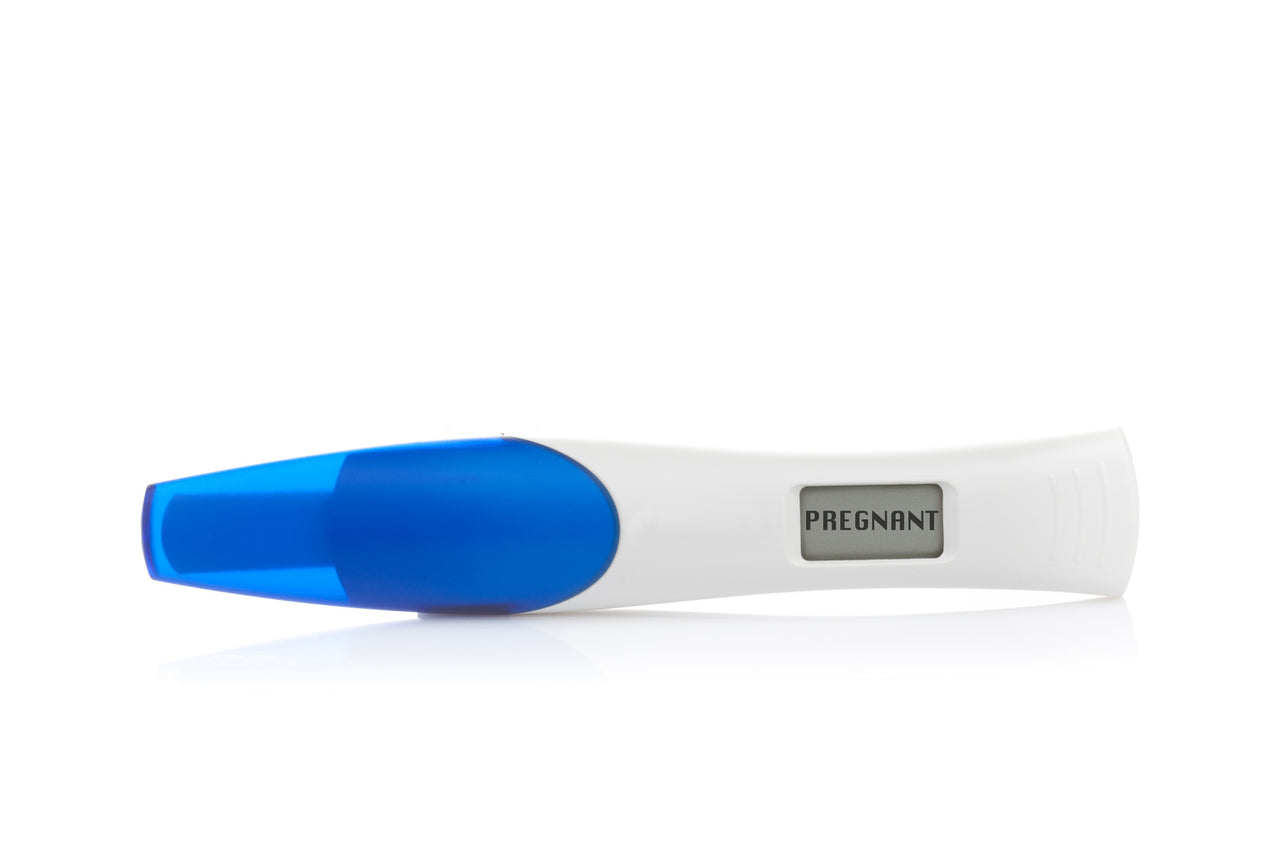
Why Was My Home Pregnancy Test Positive, But My Blood Test Negative?

It can be extremely frustrating when your home pregnancy test is positive, but a blood test taken at your doctor’s office comes back negative. However, there are a few reasons why this would occur.
Remember that all home pregnancy tests are roughly 97% accurate when they performed correctly. The U.S. Department of Health and Human Services’ Office on Women’s Health provides a few notes on how best to take a home pregnancy test:
- Choose your home pregnancy test wisely. Some have a lower sensitivity level than others. Lower sensitivity means that those tests will be able to detect hCG in your urine early on in your pregnancy.
- Before using a home pregnancy test, also check the expiration date and read the instructions thoroughly. Their research suggests that you wait for at least 10 minutes before checking the results.
- Each day that you are pregnant, the amount of hCG in your urine continues to increase. Therefore, if you were to take a test immediately after the first day of your missed period, there will not be enough hCG in your urine yet to show up on the test. Plenty of home pregnancy tests state that they are 99 percent accurate when used on the first day of a missed period. Nevertheless, research today indicates that most of these tests are not truly capable of detecting low levels of hCG that is typically present in urine this early in a pregnancy. Even if they did, the results are usually very faint. It is better to take a home pregnancy test at least one week after you have missed a period. Also, testing with your first-morning urine can help improve the test’s accuracy.
Receiving a positive result on a home pregnancy test means that there is a presence of hCG in your body and is typically a sign that you have become pregnant. However, that result could be a false positive; meaning that even though it is positive, you are not pregnant. False positives, according to WebMD, can occur if you have blood or protein present in your urine. There are also certain types of drugs, like tranquilizers, anti-convulsants, and hypnotics, which can cause false-positive test results on a home pregnancy test.
Blood tests taken at your doctor’s office are thought to be more accurate than home pregnancy tests, although they are not necessarily more sensitive. The blood test results are contingent upon the method and technique of how the blood was drawn, transported, and tested, as well as upon the lab itself.
A quantitative blood test, also known as a beta hCG test, measures the exact units of hCG present in your blood, even the tiniest amount. A qualitative hCG blood test will provide a yes or no answer on whether you are pregnant.
Each lab varies as to what it considers a positive pregnancy test with typical cutoffs for positive blood tests for pregnancy being 5, 10, and 25 units. Any level that is under five is considered negative, and a blood test that is triggered at 25 units of hCG is not any more sensitive than several of the home pregnancy tests.
However, a qualitative pregnancy blood test may provide a negative result even though you are pregnant if you take any diuretics as they can interfere with the test results. The timing of this test is also essential, as it will only show a positive after 7 to 10 days after you have become pregnant.
A quantitative pregnancy blood test is also affected by the use of diuretics, but it can fail to detect hCG even when you are pregnant if it is taken too early, or if the hCG levels are too low. Keep in mind that it does take at least seven days after fertilization for this type of blood test to become positive. Very low hCG levels can be the result of an ectopic pregnancy, a miscarriage, or an abortion.
It is highly suggested that you wait a few more days before taking another pregnancy test.