
Quick Answer
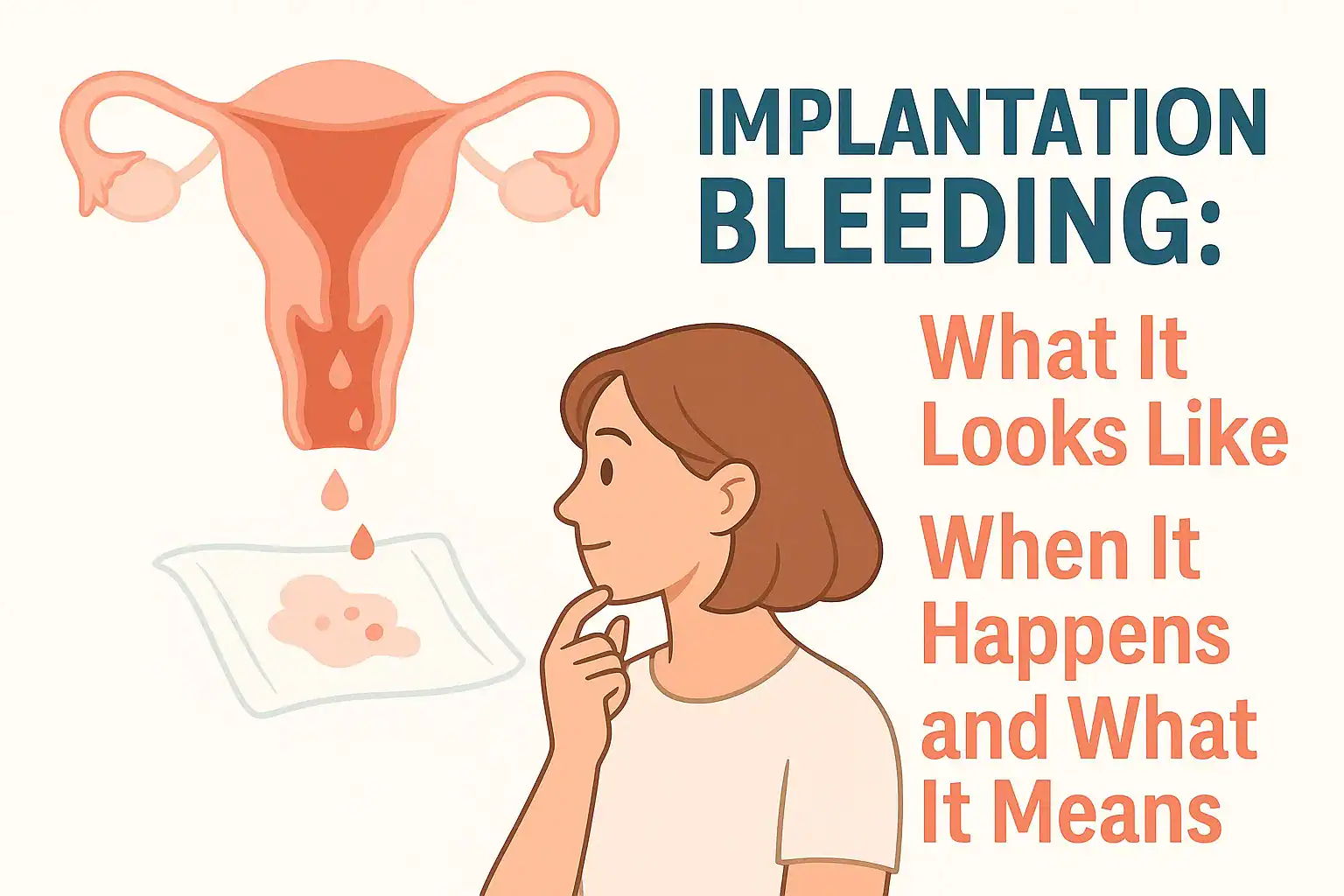
Implantation bleeding is usually light pink or brown spotting that occurs about 6 to 12 days after ovulation. It’s typically very light and lasts just a day or two.
When you’re trying to conceive, every new symptom feels like it could mean something. A little spotting in your underwear can set off a wave of questions: Is this a sign of pregnancy? Or is my period starting early?
Implantation bleeding is one of those things that gets whispered about in forums and Googled in the middle of the night. It’s subtle, often missed, and easy to confuse with something else.
Let’s walk through what it usually looks like, when it tends to happen, and what it might mean for your journey.
What Implantation Bleeding Typically Looks Like
Most people describe implantation bleeding as light pink or rusty brown spotting. It’s usually very light, not enough to fill a pad or tampon, and it tends to last a few hours to a couple days at most.
It might look like:
- A faint streak on toilet paper
- A spot or two in your underwear
- Brown discharge a few days before your period
You shouldn’t see anything heavy, bright red, or filled with clots. Wondering what color implantation bleeding should be? Here’s what’s typical and what’s not.
When Does Implantation Bleeding Happen?
Implantation usually happens between 6 and 12 days after ovulation. If you’re tracking your cycle, that puts it just a few days before your expected period, which is exactly why it can be so confusing.
It may show up:
- Around 6–8 DPO (days past ovulation)
- As early as 5 days after ovulation for some
- Just before your expected period
For a clinical breakdown of how implantation works, Cleveland Clinic’s overview of implantation bleeding offers helpful background.
Not sure if it’s implantation or your period? This guide on implantation bleeding vs period breaks down the differences clearly.
Implantation Bleeding vs Period: What’s the Difference?
Here’s a quick look:
Feature
Implantation Bleeding
Period
Color
Light pink or brown
Bright red or dark red
Flow
Very light spotting
Moderate to heavy
Duration
A few hours to 2 days
3–7 days
Timing
6–12 DPO
Around 14 DPO (or later)
Cramping
Mild or none
Can be stronger or achy
Want a deeper comparison? Our full guide on implantation bleeding vs period walks through the differences in more detail, including color, flow, cramps, and timing.
When Can You Take a Pregnancy Test?
This is the million-dollar question.
After implantation, your body starts producing hCG – the hormone that pregnancy tests detect. But it takes time for levels to build up.
- For most, the earliest accurate test is 2–3 days after spotting stops
- If you’re using early detection tests, some can detect hCG as early as 8–10 DPO
- Testing too soon can lead to false negatives (which can feel crushing)
Not sure when to test after implantation? This guide on when to take a pregnancy test explains exactly how long to wait.
Can Implantation Bleeding Be Mistaken for Something Else?
Absolutely. It’s easy to confuse with:
- Breakthrough bleeding
- Ovulation spotting
- Hormonal dips
- Even early miscarriage
Seeing clots and not sure if it’s normal? This guide on implantation bleeding with clots explains what’s typical and when it’s time to check in with your provider.
What If You’re Still Not Sure?
That’s okay. You don’t have to have all the answers right now.
Spotting can mean implantation… or it might not. The best thing you can do is listen to your body, be kind to yourself, and give it time to reveal what’s next.
And remember, no matter how uncertain this moment feels, you’re not alone in it.
TL;DR Summary
Implantation bleeding is usually light pink or brown spotting that happens about 6 to 12 days after ovulation. It’s typically very light, short-lived, and doesn’t contain clots.
Because of the timing, it’s easy to confuse with an early period. Watching for color, flow, and cramping can help you tell the difference. If you’re unsure, give it a few days and test or check in with your provider for peace of mind.